
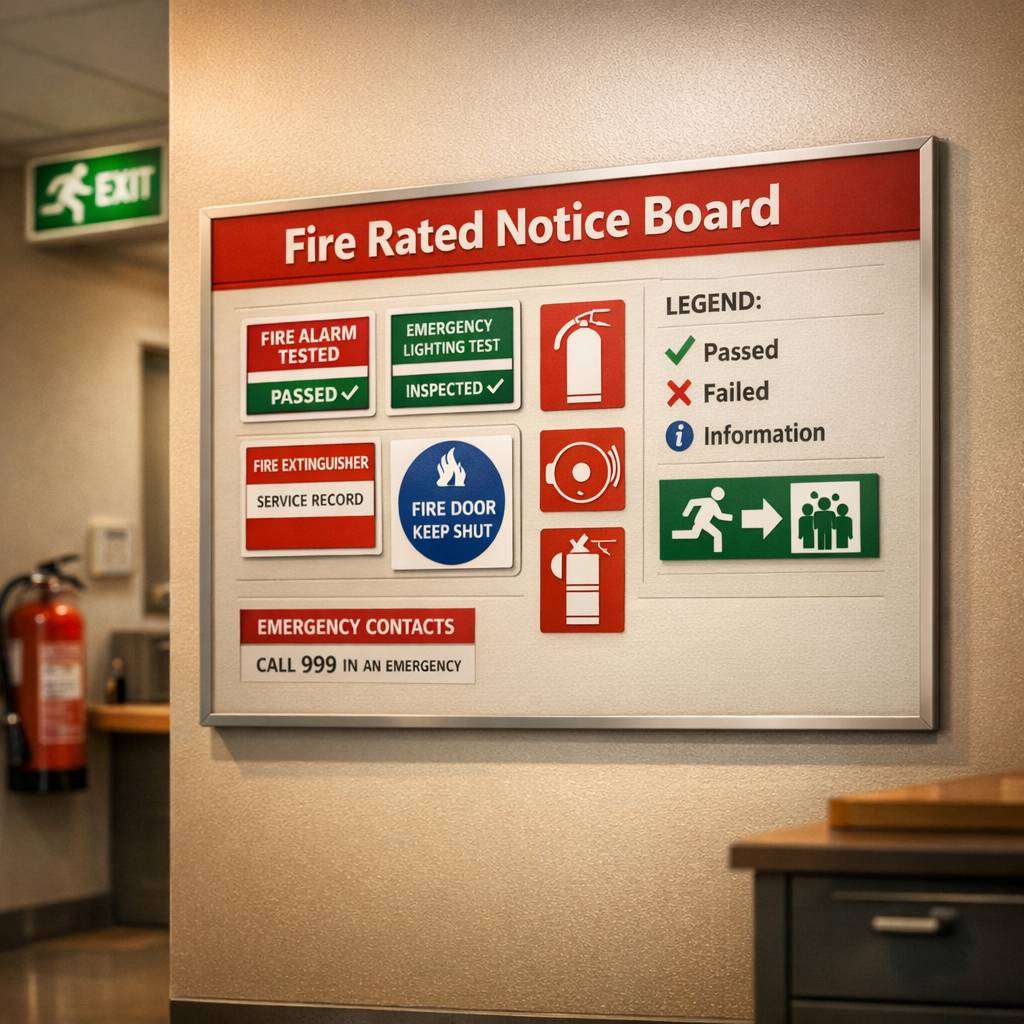
Fire safety is not a luxury; it is a fundamental requirement for any building, workplace, or public space. Selecting the right notice boards that meet fire safety standards can make a meaningful difference in safeguarding lives and protecting information during an emergency. This guide provides a practical overview of fire rated notice boards, emphasising compliance, durability, and everyday usability for facilities managers, engineers, and organisational leaders.
In the UK, fire safety legislation and building regulations emphasise both the protection of occupants and the preservation of critical information during an incident. Fire rated notice boards are designed to resist ignition, limit the spread of flames, and provide a reliable surface for notices, evacuation plans, and safety communications. By understanding material options, testing standards, and practical installation considerations, organisations can choose display solutions that perform when it matters most.
FAQ: Fire Rated Notice Boards
What is a fire rated notice board?
A fire rated notice board is a display panel designed to resist fire and heat for a specified period, helping to protect and preserve important notices during a fire event. They are certified to meet fire resistance standards and are commonly used in commercial, educational, and public buildings.
Why choose fire rated notice boards?
They provide enhanced safety by delaying the spread of flames and smoke to the notices inside, preserving critical information, improving evacuation planning, and meeting building safety codes and insurance requirements.
What materials are used in fire rated notice boards?
Common materials include gypsum boards, mineral wool cores, intumescent coatings, and steel or aluminum casings. The specific composition depends on the fire rating (e.g., 30, 60, 90 minutes) and the installation environment.
How is fire resistance rating determined?
Ratings are determined by standardised testing under controlled conditions (such as EN 13501 or ASTM tests). The board must maintain integrity and insulation for the specified duration under fire exposure.
What fire rating should I select?
Choose a rating based on your building’s fire safety strategy, local building codes, and the significance of the information housed inside. Higher-risk areas or critical facilities may require 60-minute or higher ratings.
Can these boards be installed in all locations?
Most fire rated notice boards are suitable for interior use in corridors, exits, reception areas, and classrooms. Some models are designed for damp or high-traffic environments; check product specifications for suitability.
Do fire rated notice boards require special installation?
Installation should follow the manufacturer’s guidelines and local building regulations. Some products may require specific frame materials, sealants, or mounting methods to maintain the fire rating.
Are fire rated notice boards tamper-resistant?
Many models feature tamper-evident seals, locked doors, or vandal-resistant fronts to protect notices from unauthorised access. Check product features for security options.
How do I maintain a fire rated notice board?
Regularly inspect for damage, ensure seals remain intact, replace damaged doors or panels promptly, and keep the board clean. Do not modify the internal construction, as it could affect the fire rating.
How long do fire rated notice boards last?
Durability depends on usage and environment. With proper care, they can last many years. The fire rating remains valid as long as the product remains intact and is not altered.
How do I choose a supplier or model?
Consider the fire rating, material quality, durability, size options, mounting methods, warranty, and compliance with relevant standards. Read customer reviews and request certification documents from the supplier.
Are fire rated notice boards compliant with building codes?
When properly specified, installed, and maintained according to standards and local codes, they help achieve compliance. Always verify that the model carries up-to-date certifications and meets regional requirements.
Do fire rated notice boards come in different sizes and finishes?
Yes. They are available in various sizes, frame finishes (e.g., powder-coated metal, wood veneer), and door styles. Custom dimensions may be offered by some manufacturers.
What is the typical price range?
Prices vary by rating, size, materials, and features. Basic models may be economical, while high-rated, high-quality boards with security features can be more expensive. Request quotes for exact pricing.
Where can I buy fire rated notice boards?
From specialised safety equipment suppliers, architectural and interior fit-out companies, or building supply retailers. You can also find online manufacturers offering customisation options.
If you’d like, I can tailor these FAQs to a specific region, building code, or product line.
What are fire rated notice boards?
Fire rated notice boards are display systems constructed from materials that resist fire, burn slowly, or self-extinguish to reduce the spread of flames. They are typically rated according to international or national standards, such as EN 13501 or equivalent UK specifications. The boards may feature a fire retardant core, a protective cover, and a locking mechanism to prevent tampering with essential safety notices. Key variants include fire resistant noticeboards, fire proof bulletin boards, and fire rated display boards designed for high-traffic areas, corridors, or escape routes.
Core materials and design features
Choosing the right core material is fundamental to performance. Common options include:
- Mineral fibre cores: Excellent fire resistance and dimensional stability, often used in high-specification environments.
- Fibre-reinforced cores: A balance of strength, lightness, and fire retardant properties.
- Foam cores with fire retardant additives: Cost-effective and versatile for general use, though typically with specific fire ratings.
In addition to the core, the outer framing and façade influence longevity and maintenance. Look for:
- Steel or aluminium frames with corrosion resistance for long-term durability.
- Fire retardant coatings on timber components, reducing the risk of ignition.
- Gasket seals that maintain integrity against smoke and heat transfer.
- Clear, durable acrylic or tempered glass fronts that resist impact and scratching.
Fire rating standards and compliance
Compliance is essential to ensure that fire rated notice boards perform as intended. Look for:
- EN 13501-1 classification or equivalent UK approvals, indicating reaction-to-fire performance.
- A declared fire rating (e.g., 30 minutes, 60 minutes, or higher) appropriate to the location and occupancy type.
- Third-party certification or factory production control (FPC) marks from recognised bodies.
- Compliance with local building regulations and fire safety codes relevant to the building type (office, education, healthcare, etc.).
Note that fire performance is not uniform across all components. A board may be fire rated, but hardware such as locks or hinges may not be equally rated. Ensure the entire system—board, door, frame, and locking mechanism—meets the required standard.
Fire rated notice boards offer durable, compliant solutions for safety communications in restaurants, schools, and offices. Their robust construction protects important notices from heat and smoke, ensuring critical information remains visible during emergencies. Easy installation, vandal resistance, and clear visibility make them ideal for busy environments. For more resources and options, visit https://www.displaydevelopments.co.uk to explore fire rated notice boards, installation tips, and compatible accessories. Investing in these boards enhances safety planning and regulatory compliance for any facility.
Variants and practical uses
- Fire retardant display boards: Suitable for general notice needs in areas where a higher level of fire protection is desirable.
- Fire rated noticeboards: Explicitly designed to resist fire for a specified period, ideal for escape routes and areas with higher risk.
- Fire resistant noticeboards: Focused on resisting heat transfer and smoke penetration to protect the notices inside.
- Fire proof bulletin board: A broad term often used for boards rated to withstand fire exposure up to a defined duration.
- Fire rated lockable notice boards: Combine security with fire resistance, allowing authorised personnel to update notices without compromising safety.
- Fire rated display boards: Optimised for frequent updating in dynamic environments like schools, universities, and corporate campuses.
Applications span corridors, reception areas, staff rooms, laboratories, data rooms, and electrical stairwells. For evacuation routes, ensure the board remains legible and securely mounted even under heat and smoke conditions.
Installation and maintenance considerations
Proper installation maximises fire performance and longevity:
- Positioning: Place fire rated notice boards in strategic locations such as corridors, near exits, or at stairwells, ensuring visibility and accessibility while complying with sightline requirements.
- Fixing: Use robust fixings that suit wall substrates (masonry, concrete, plasterboard). Verify that anchors and screws are rated for high-temperature conditions if exposed to potential heat.
- Sealing: Ensure seals between the frame and the wall are intact to minimise smoke ingress and maintain the board’s integrity.
- Accessibility: If a board is lockable, ensure the locking mechanism remains accessible to authorised personnel during an emergency.
- Signage: Keep notices up to date. A fire rated display board does not exempt organisations from routine maintenance; regular inspection ensures readability and compliance.
- Cleaning: Use non-abrasive cleaners to protect the surface and avoid compromising the fire-rated properties of the core and façade.
Durability and maintenance considerations
Durability is a function of material quality, environmental conditions, and usage:
- Moisture resistance: In humid environments, choose boards with moisture-resistant cores and seals to prevent warping or mould.
- UV stability: For sunlit areas, select front façades with UV-resistant finishes to prevent yellowing and fading of notices.
- Theft resistance: In public or school settings, fire rated lockable notice boards protect critical safety information from tampering.
- Replacement strategy: Have a policy for periodic review of notices and replacement of damaged boards to ensure legibility and compliance.
Practical tips for procurement
- Define the required fire rating based on occupancy type, escape routes, and local regulations.
- Verify the board’s test evidence and certification documents, and request a copy of the performance data sheet.
- Assess total cost of ownership, considering replacement frequency, maintenance, and accessories (locks, casings, and seals).
- Consider modular or dual-front designs that allow easy updating of notices without compromising fire performance.
- Choose a supplier with robust after-sales support, including installation guidance, warranty coverage, and spare parts for locks and hinges.
Conclusion: navigating safety and durability
Fire rated notice boards offer a critical blend of safety performance and practical usability. By selecting fire retardant display boards or fire proof bulletin boards that align with defined fire ratings and compliance criteria, organisations can safeguard information and support efficient evacuation procedures. When evaluating options, consider material composition, certification, installation requirements, and ongoing maintenance needs to ensure a resilient, compliant display solution.
Fire rated notice boards offer essential safety communication in compliant spaces. displaydevelopments.co.uk These durable boards resist heat and provide clear, durable signage for emergencies, ensuring occupants receive timely instructions during incidents and fire drills, with reliable visibility and robust installation.